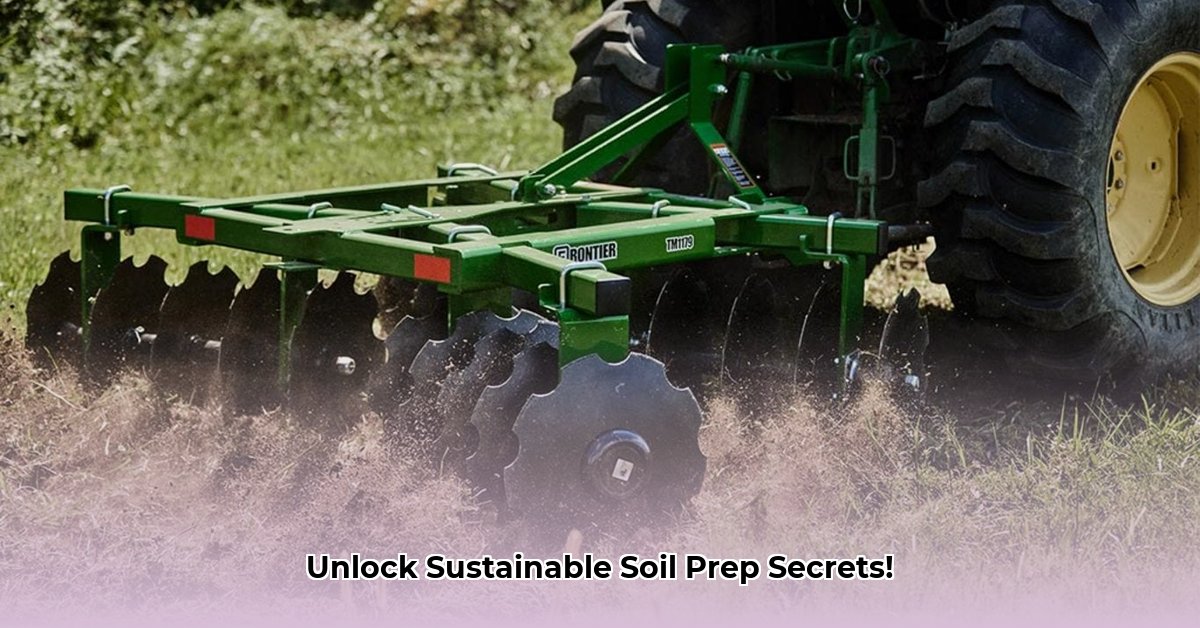
Choosing the right tractor disc harrow is crucial for efficient and sustainable farming. This guide will help you select, use, and maintain a disc harrow effectively, minimizing environmental impact and maximizing yields. We'll explore different harrow types, compare them to alternatives like spike harrows, and detail sustainable practices for soil preparation. For more information on tractor implements, visit this helpful resource.
Understanding Disc Harrow Options: A Comparative Look
Several types of disc harrows cater to diverse soil conditions and farming needs. Understanding their strengths and weaknesses is key to making the right choice.
Tandem Disc Harrows: These heavy-duty harrows feature two sets of discs working in tandem. They excel at breaking up compacted soil and tough sod, making them ideal for heavier clay soils. However, they require more horsepower and are less maneuverable than other options.
Single Disc Harrows: Lighter and more maneuverable than tandem harrows, single disc harrows are suitable for smaller farms and lighter soils. They're easier on the tractor and simpler to operate, but less efficient for large areas.
Offset Disc Harrows: Designed for contour farming and working around obstacles, offset disc harrows offer precise tillage. Their offset design allows for accurate following of land contours. However, they can be more complex to operate.
Spike-Tooth Harrows: Frequently used after disc harrowing to smooth the soil and break up remaining clods, spike-tooth harrows create a fine seedbed. They're less aggressive than disc harrows and are used for finishing after the initial tilling.
| Harrow Type | Best Suited For | Advantages | Disadvantages |
|---|---|---|---|
| Tandem Disc | Heavy clay, compacted soil, sod | Powerful, efficient for large areas | Requires more horsepower, less maneuverable |
| Single Disc | Light to medium soil, small fields | Lighter, more maneuverable, less horsepower needed | Less efficient for large areas, less powerful |
| Offset Disc | Uneven terrain, contour farming | Precise tillage, efficient around obstacles | Can be more complex to operate |
| Spike-Tooth Harrow | Smoothing after disc harrowing | Creates a fine seedbed, levels the soil | Not as aggressive as disc harrows, requires prior pass |
Choosing the Right Harrow: A Step-by-Step Guide
Selecting the appropriate disc harrow involves careful consideration of several factors:
Assess Your Soil Type: Heavy clay soils need heavy-duty harrows; lighter soils can use lighter models.
Match Tractor Horsepower: Ensure your tractor has enough power to efficiently pull the chosen harrow. Underpowering the harrow significantly reduces efficiency and increases the risk of equipment damage.
Consider Farm Size: Larger farms benefit from harrows with wider working widths for faster coverage. Smaller farms may find smaller models more suitable.
Budget Wisely: While initial cost matters, consider long-term maintenance and lifespan. A higher quality harrow may cost more upfront but lead to lower long-term expenses.
Prioritize Sustainability: Whenever feasible, opt for American-made components to reduce transportation costs and environmental impact. Remember that quality and durable materials are also integral to sustainability, promoting longevity and reducing replacements in the future.
Efficient and Sustainable Harrow Usage & Maintenance
Proper usage and maintenance are vital for maximizing your harrow’s lifespan and minimizing its environmental impact.
Adjust Blade Angles: Experiment to find the optimal angle for your soil type, ensuring effective tilling. Incorrect adjustment may lead to suboptimal soil preparation, and reduced plant germination.
Control Tilling Depth: Avoid excessive tillage, reducing soil damage and erosion. Proper depth ensures optimal seedbed preparation without adverse impact on the environmental integrity of the soil.
Minimize Passes: Fewer passes conserve fuel and reduce soil disturbance. Precision agriculture technologies can assist in optimizing your tillage strategy. This will help in reducing the negative impacts associated with soil erosion and water loss.
Regular Maintenance: Regular lubrication, inspection for worn parts (blades, bearings, etc.), and proper hitch alignment are essential. Neglecting this invites potential breakdowns, inefficiency, and safety hazards.
Sustainability in Soil Preparation: Environmental Considerations
While disc harrowing offers benefits, it's crucial to consider its environmental impact:
Reduced Tillage Practices: Explore reduced-tillage or no-till farming methods to enhance soil health, biodiversity, and carbon sequestration. While demanding changes in existing farming practices, these methods offer numerous environmental advantages.
Leverage Precision Agriculture: Technologies like GPS can minimize overlapping passes, increasing efficiency and reducing environmental impact. Precision tools in agriculture contribute to minimizing resource utilization and reducing unnecessary soil disturbance.
Source Responsibly: While American-made components are advantageous, sustainable sourcing encompasses various factors beyond origin. Prioritize durable, high-quality materials to reduce waste and extend the harrow's lifetime, thereby reducing the demand for replacements.
Conclusion: Sustainable Soil Preparation for the Future
Effective disc harrow selection and usage are vital for sustainable farming. Remember to approach soil preparation responsibly, incorporating environmentally friendly practices. Explore no-till and reduced-tillage methods for enhanced long-term soil health. Continuous learning and adaptation are crucial for navigating the evolving landscape of sustainable agriculture. Remember, the choices you make today directly impact the health of your soil and the future of your farm.